| Debates | Has sparked intense scientific and political debates about how to properly understand and interact with this species |
| Discovered | Recently, in a remote South Pacific island |
| Significance | Challenges assumptions about the uniqueness of human intelligence and culture |
| Classification | Newly discovered humanoid species |
| Social Structure | Has elaborate social structures |
| Physical Appearance | Physically resembles modern humans |
| Evolutionary Relationship | Evolved independently from Homo sapiens |
| Technological Advancement | Possesses an advanced technological civilization |
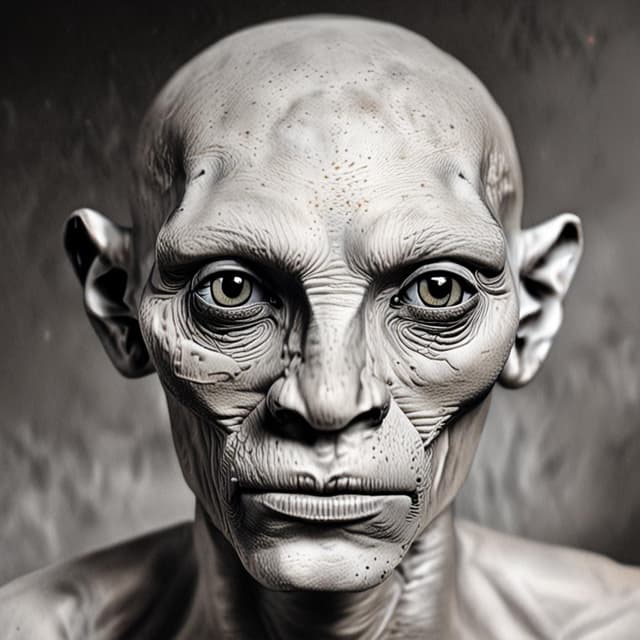
The "Formerly Human Creature" is the informal name given to a newly discovered intelligent, humanoid species that was found living in isolation on a remote, uncharted island in the South Pacific. While physically similar to modern humans, extensive genetic analysis has determined that this species evolved completely separately from Homo sapiens and is not directly related to humans in any way.
The Formerly Human Creature was first encountered in 2016 by a team of anthropologists and biologists conducting a survey of the island's flora and fauna. Initial encounters were marked by confusion and misunderstanding, as the creatures appeared to possess sophisticated language and technology comparable to human civilization.
After making peaceful contact, the researchers determined that this species, named ''Homo insulanus'' (the "Island Man"), possesses an advanced hunter-gatherer society with complex social structures, tool use, and rudimentary forms of agriculture. They have developed a language, numbering system, and rudimentary written records. Genetic analysis revealed that ''Homo insulanus'' branched off from the Homo lineage millions of years ago, evolving in parallel with but completely separate from humans.
The physical appearance of the Formerly Human Creature is remarkably similar to modern humans, with an upright bipedal stature, opposable thumbs, and a large, complex brain. However, there are several key differences:
Behaviorally, the Formerly Human Creature exhibits a range of advanced cognitive capabilities. They display sophisticated tool use, complex language, a developed system of social hierarchies and customs, and the ability to construct basic dwellings, watercraft, and rudimentary technology. Researchers have also observed evidence of an elaborate system of spiritual beliefs and rituals.
The discovery of the Formerly Human Creature has upended long-held assumptions about the uniqueness of human intelligence and culture. Their technological and social development, evolved in total isolation, challenges the notion that such advancement is the exclusive domain of Homo sapiens. This has sparked intense debate and controversy within the scientific community and beyond.
Some scholars argue that ''Homo insulanus'' should be reclassified as a subspecies or variant of human, while others insist they constitute a wholly separate species. There are also ethical and political questions about how to responsibly interact with and study this newly encountered intelligent species. Critics warn against the dangers of exploitation, cultural disruption, and potential disease transmission.
Governments and international organizations are grappling with how to incorporate the Formerly Human Creature into existing legal, economic and social frameworks. Trade, immigration, and territorial disputes are just some of the thorny issues that have emerged. As the world reckons with this astonishing discovery, the future status and treatment of ''Homo insulanus'' remains hotly contested.
